
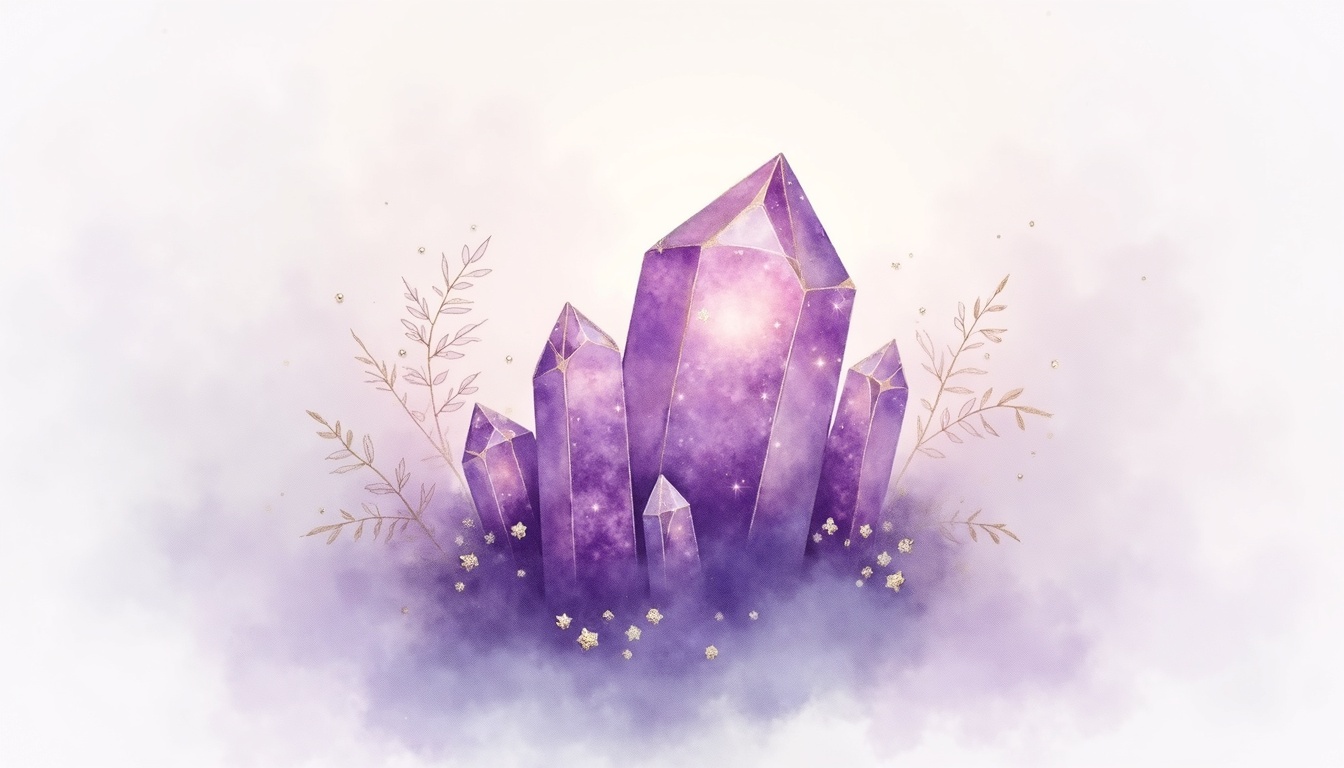
Amethyst symbolizes calm clarity, spiritual insight, and protective grounding. Its violet hue has long represented sobriety, higher awareness, and emotional balance. Many keep amethyst nearby as a reflective tool for meditation, restful intention, and quieting mental noise, treating it as a gentle reminder to pause, center, and reconnect with a sense of inner steadiness.
Origins and Historical Associations
Amethyst has carried meaning across centuries, its name rooted in the ancient Greek word amethystos, meaning not intoxicated. Early wearers associated the stone with sobriety and clear thinking, often crafting it into cups or amulets in the belief that it could keep the mind steady and unclouded. Beyond its ties to temperance, amethyst held a place in royal and religious regalia, gracing crowns, rings, and ecclesiastical jewelry as a symbol of piety, humility, and higher devotion. Bishops wore amethyst rings as an emblem of spiritual authority, while European nobility prized the stone for its rich violet color, once considered as valuable as sapphire or ruby. This layered history gives amethyst a dual identity, at once a stone of grounded self control and a marker of elevated, contemplative thought. Its coloration, ranging from soft lilac to deep royal purple, has long been read as a visual bridge between the calm of blue and the passion of red, reinforcing its symbolic role as a balancing presence between grounded stability and higher aspiration.
Symbolic Meaning and Spiritual Associations
In contemporary crystal traditions, amethyst is often described as a stone of the mind and spirit, linked to the crown chakra and associated with clarity, intuition, and inner peace. Many who work with crystals view amethyst as a companion for quieting mental chatter, encouraging a state of reflection rather than reaction. It is frequently associated with spiritual growth, deep meditation, and a sense of connection to something larger than the everyday self. The stone's violet tone is often interpreted as a blend of grounding red undertones and calming blue, symbolizing the meeting point of physical steadiness and higher awareness. Amethyst is also commonly regarded as a protective stone, thought to create a sense of calm boundary around one's energy, helping the wearer feel less scattered in chaotic environments. Some traditions connect it to emotional balance, framing it as a gentle ally for processing grief, stress, or transition. Rather than promising outcomes, amethyst is best understood as a symbolic touchstone, a reminder to slow down, breathe, and return attention to one's inner center.
Common Uses and Practices
Amethyst appears in many forms of intentional practice, from jewelry worn as a personal talisman to raw clusters placed in living spaces as a visual anchor for calm. Meditation practitioners often hold a piece of amethyst or place it nearby during quiet reflection, using its presence as a focal point for settling the mind. Some incorporate amethyst into bedtime rituals, resting a small stone on a nightstand as a symbolic invitation to unwind and let go of the day's noise. Others use amethyst in grid work or altar arrangements, positioning it alongside complementary stones to represent themes of clarity, protection, or spiritual intention. Because amethyst is widely available in many forms, from tumbled stones to geodes and jewelry settings, it lends itself easily to varied personal rituals. Some people carry a small piece in a pocket or bag as a portable reminder of calm intention throughout a busy day. Others gift amethyst to mark transitions, such as moving into a new chapter of life or stepping back from a demanding period, treating the stone as a quiet symbol of renewed balance and thoughtful pacing.
Amethyst in Modern Reflective Practice
Today amethyst continues to hold a place in wellness spaces, meditation rooms, and personal collections, valued less for mystical promise and more for its symbolic invitation to pause. Many describe working with amethyst as a way to mark intention, using the stone as a physical cue to step back from overstimulation and reconnect with a calmer internal rhythm. Journaling alongside amethyst, or simply holding it during moments of stress, is a common practice among those who find comfort in tactile, symbolic rituals. Its cool violet tone is often associated with introspection, making it a popular choice for evening rituals, quiet study, or creative reflection. Some also pair amethyst with practices like breathwork or gentle stretching, using the stone as a visual and tactile anchor rather than attributing any guaranteed effect to it. Because amethyst is so widely recognized, it also serves a cultural role, often given as a birthstone gift for February or chosen simply for its aesthetic and symbolic resonance. Whether displayed decoratively or used in private reflection, amethyst's enduring popularity speaks to its flexible symbolism, adaptable to whatever kind of calm or clarity someone is seeking in their own life.
Caring for and Connecting with Amethyst
Many who work with amethyst develop simple personal rituals for cleansing and reconnecting with the stone's symbolic energy, such as resting it under moonlight, smudging it with smoke, or simply setting an intention while holding it. These practices are not about altering the stone physically but about renewing one's own relationship to its meaning, treating the ritual as a moment of mindful reset. Because amethyst can fade in strong sunlight over time, many choose to display it in softer light or rotate its placement, which also becomes its own small practice of care and attention. Choosing a piece of amethyst, whether a polished pendant, a raw point, or a cluster for the home, often becomes a personal act of reflection in itself, guided by color, shape, or simply an intuitive pull toward a particular stone. There is no single correct way to keep or use amethyst, and many people find that its meaning shifts subtly over time, aligning with whatever season of life they are moving through. This adaptability is part of what makes amethyst such an enduring presence in personal and reflective practice, a quiet violet companion for whatever clarity is being sought.
However you come to amethyst, let it serve as a gentle prompt rather than a promise, a small violet reminder to pause, breathe, and check in with your own sense of clarity and calm.
Questions people ask about this
What does this crystal reading mean?
Amethyst is a violet quartz long associated with calm, clarity, and spiritual attunement, prized historically as a stone of sobriety and protection and embraced today as a companion for reflection, intuition, and inner balance.
What might "Amethyst meaning" be reflecting?
Amethyst has carried meaning across centuries, its name rooted in the ancient Greek word amethystos, meaning not intoxicated. Early wearers associated the stone with sobriety and clear thinking, often crafting it into cups or amulets in the belief that it could keep the mind steady and unclouded. Beyond its ties to temperance, amethyst held a place in royal and religious regalia, gracing crowns, rings, and ecclesiastical jewelry as a symbol of piety, humility, and higher devotion. Bishops wore amethyst rings as an emblem of spiritual authority, while European nobility prized the stone for its rich violet color, once considered as valuable as sapphire or ruby. This layered history gives amethyst a dual identity, at once a stone of grounded self control and a marker of elevated, contemplative thought. Its coloration, ranging from soft lilac to deep royal purple, has long been read as a visual bridge between the calm of blue and the passion of red, reinforcing its symbolic role as a balancing presence between grounded stability and higher aspiration.
How should I sit with this reading?
However you come to amethyst, let it serve as a gentle prompt rather than a promise, a small violet reminder to pause, breathe, and check in with your own sense of clarity and calm.
Was this helpful?
A quiet signal helps us tell which readings land, and which ones need more care.
A portrait card is made for every reading, sized for Pinterest.