
Obsidian symbolizes truth, protection, and grounding. Formed from rapidly cooled volcanic lava, it is traditionally seen as a stone of self-reflection, believed to reveal hidden emotions and patterns. Many use it intentionally for shadow work, emotional clarity, and creating a sense of energetic boundary or stability during times of change.

Origins of a Grounded Stone
Obsidian forms when lava cools so quickly that no crystal structure has time to develop, leaving behind a smooth volcanic glass rather than a traditional mineral. This origin story matters to its symbolism. Born of fire and sudden transformation, obsidian has long been linked to intensity, speed, and raw natural power. Ancient cultures across Mesoamerica, the Mediterranean, and beyond shaped obsidian into blades, mirrors, and ceremonial tools, prizing it for its sharpness and reflective black surface. That dual nature, cutting yet reflective, is central to how the stone is interpreted today. It is not a gentle, pastel crystal meant to soothe on the surface. Instead, obsidian invites a more direct kind of engagement, one rooted in honesty and confrontation with what is real. Because it emerges from upheaval, many who work with crystals see obsidian as a companion for personal transformation, especially during periods of rapid change or emotional intensity. Its blackness is often read symbolically as a void or a mirror, a surface that absorbs light rather than scattering it, which lends itself naturally to themes of introspection, protection, and truth telling.
The Mirror Within: Shadow Work and Self-Reflection
Perhaps the most enduring association with obsidian is its role as a mirror for the self. Historically, polished obsidian was used to create some of the earliest reflective surfaces, predating glass mirrors by centuries. This practical history has evolved into a rich symbolic one. In crystal traditions, obsidian is considered a stone of shadow work, a term used to describe the practice of turning attention toward the parts of ourselves we tend to avoid: old wounds, unspoken fears, patterns we would rather not name. Working with obsidian is often framed as an invitation rather than a demand. It does not promise comfort. It offers instead a kind of clarity, a willingness to look plainly at what is there. Many people place obsidian on an altar or hold it during quiet reflection specifically because its dark, glassy surface resists distraction. There is nothing sparkling or diffuse about it. This starkness is exactly why it is valued by those seeking honest self-assessment rather than gentle affirmation. Journaling alongside obsidian, or simply sitting with the stone in silence, is a common intentional practice for those processing grief, transition, or emotional confusion, using its symbolism as a focal point for honest reflection rather than avoidance.
Protection and Boundaries
Alongside its reflective qualities, obsidian carries a long association with protection. Many crystal traditions describe it as a stone that absorbs negativity or forms an energetic boundary between the self and outside pressures. This protective symbolism likely stems from its opacity and depth. Unlike translucent stones that suggest openness, obsidian's solid blackness reads as a kind of shield, something that holds its ground. In practice, this means obsidian is often chosen by those going through emotionally demanding circumstances, such as ending a relationship, navigating conflict, or feeling overexposed in a public or professional setting. Carrying a small piece of obsidian, or placing one near an entryway, is a common intentional gesture meant to symbolize the drawing of a boundary. This is not framed as a guarantee of safety, but rather as a ritual of intention, a physical reminder to protect one's energy and attention. Snowflake obsidian, flecked with white inclusions, is sometimes interpreted slightly differently, symbolizing the presence of light or balance even within darkness, making it a popular variant for those who want the grounding of obsidian without its more intense, purely shadow-focused symbolism.
Varieties and Their Nuances
Obsidian is not a single uniform stone, and its variations carry their own layers of meaning within crystal interpretation. Black obsidian is the most classic form, associated most strongly with truth-telling, grounding, and protection. Snowflake obsidian, with its pale gray-white patterning, is often linked to themes of purity within imperfection, a reminder that light and shadow coexist. Mahogany obsidian, with reddish-brown streaks, is sometimes associated with strength and resilience, its warmer tones softening the starkness typically attributed to the stone. Rainbow obsidian, which reveals iridescent bands under the right light, is often connected to the idea of hidden beauty, suggesting that even in darkness, there can be unexpected color and depth once a stone or a situation is examined closely. Apache tears, a smaller, more transparent form of obsidian, are traditionally associated with grief and healing from loss, their name rooted in folklore about mourning. Each variety, while sharing the volcanic origin and reflective symbolism of classic obsidian, offers a slightly different emotional register for those choosing a stone with intention, whether the goal is confronting hard truths, honoring grief, or finding resilience through difficulty.
Working with Obsidian Intentionally
For those drawn to obsidian, the most common intentional practices center on reflection, grounding, and boundary-setting rather than anything ornamental. Holding a piece during meditation is a widely practiced ritual, often paired with the intention of naming a fear or pattern one wishes to understand more clearly. Some place obsidian at the base of the spine symbolically during grounding practices, reflecting its volcanic, earth-born origin. Others keep a piece on a desk or nightstand as a visual reminder to stay honest with themselves during a period of decision-making or change. Because obsidian is associated with truth rather than comfort, it is often recommended as a stone for beginnings of self-inquiry rather than a constant companion. Some practitioners suggest setting the stone down after a session of reflection, treating the practice as intentional and bounded rather than something to carry unconsciously all day. This mirrors its symbolic role: obsidian is not meant to simply exist in the background, but to prompt active, conscious engagement with whatever needs to be seen.
If you find yourself drawn to obsidian, let it be an invitation rather than a burden, a quiet prompt to sit with what is true rather than what is comfortable. Hold it, reflect, and set it down when the moment feels complete.
Questions people ask about this
What does this crystal reading mean?
Obsidian is volcanic glass long associated with truth, protection, and shadow work, valued as a mirror for self-reflection rather than a gemstone of softness. Its meaning centers on grounding, clarity, and the courage to face what lies beneath the surface.
What might "Obsidian meaning" be reflecting?
Obsidian forms when lava cools so quickly that no crystal structure has time to develop, leaving behind a smooth volcanic glass rather than a traditional mineral. This origin story matters to its symbolism. Born of fire and sudden transformation, obsidian has long been linked to intensity, speed, and raw natural power. Ancient cultures across Mesoamerica, the Mediterranean, and beyond shaped obsidian into blades, mirrors, and ceremonial tools, prizing it for its sharpness and reflective black surface. That dual nature, cutting yet reflective, is central to how the stone is interpreted today. It is not a gentle, pastel crystal meant to soothe on the surface. Instead, obsidian invites a more direct kind of engagement, one rooted in honesty and confrontation with what is real. Because it emerges from upheaval, many who work with crystals see obsidian as a companion for personal transformation, especially during periods of rapid change or emotional intensity. Its blackness is often read symbolically as a void or a mirror, a surface that absorbs light rather than scattering it, which lends itself naturally to themes of introspection, protection, and truth telling.
How should I sit with this reading?
If you find yourself drawn to obsidian, let it be an invitation rather than a burden, a quiet prompt to sit with what is true rather than what is comfortable. Hold it, reflect, and set it down when the moment feels complete.
Was this helpful?
A quiet signal helps us tell which readings land, and which ones need more care.
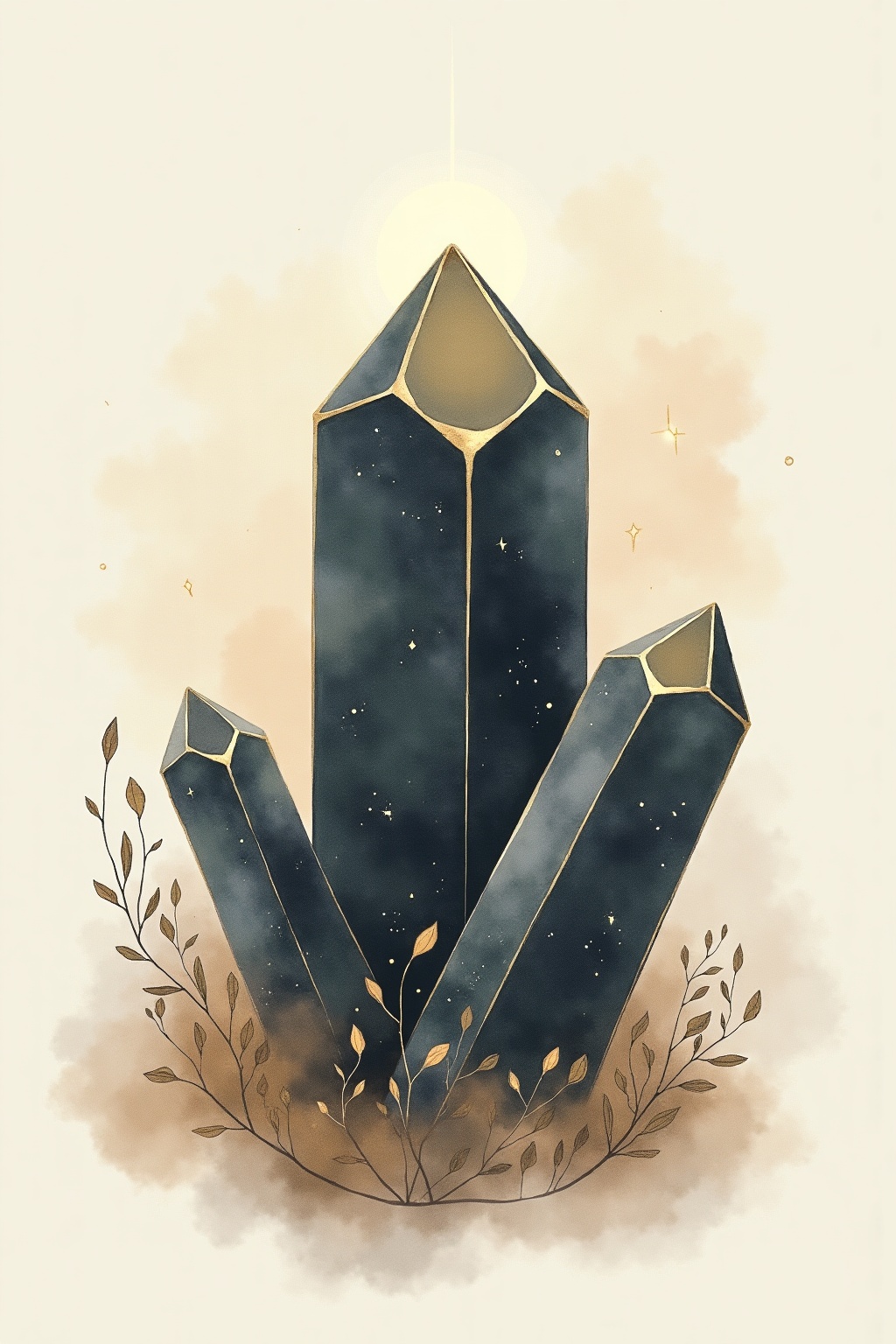
A portrait card is made for every reading, sized for Pinterest.