
The Fool represents new beginnings, innocence, and a willingness to leap without needing every answer first. Drawn alone, it suggests you're at the edge of something unwritten, a fresh chapter, an untested path, or a mindset shift. It asks for trust in the process rather than certainty about the destination.

The Image on the Card
In most traditional decks, The Fool appears as a young traveler standing at the edge of a cliff, face turned toward the sky rather than the ground beneath their feet. A small dog, sometimes read as a loyal companion or an instinct trying to get their attention, trots alongside or nips at their heel. The figure carries a small bag, or knapsack, slung over one shoulder, holding everything they need rather than everything they might want. A white rose sits in one hand, or nearby, symbolizing purity of intent rather than naivety. The sun shines behind them, warm and unclouded, suggesting that whatever lies ahead is illuminated by potential rather than threat. The cliff edge is the detail people notice most. It looks precarious, and it is meant to. The Fool is not reckless so much as unburdened. They have not yet been taught to fear the fall, or they have decided the view is worth the risk. Numbered zero in most decks, The Fool exists outside the normal sequence of the Major Arcana, before the numbered journey begins and also somehow present within every step of it. Zero is not nothing. It is possibility before it has been shaped into anything specific.
What The Fool Means Upright
Upright, The Fool speaks to beginnings that have not yet been complicated by outcome. It is the card of the first day at a new job before you know the politics of the office, the first conversation with someone before you know how the relationship will unfold, the first sentence of a project before you know if it will succeed. There is an innocence to this energy, but not an ignorant one. The Fool knows less than the seasoned traveler, and that is precisely the gift. Without accumulated caution, there is room for instinct, curiosity, and genuine openness to whatever appears next. This card often surfaces when someone is being invited to trust a process they cannot fully map in advance. It does not promise the leap will be easy or that the landing will be soft. It simply affirms that the leap itself has value, that movement toward the unknown is sometimes wiser than staying fixed in the known simply because the known feels safer. The Fool also carries a reminder about lightness. Not every step forward needs to be taken with grim determination. There is room for play, for wonder, for treating the unfamiliar as an adventure rather than only a risk to be managed.
The Fool in Context Beside Other Cards
Because The Fool is often pulled as a single card, on its own, without the surrounding context of a full spread, its meaning tends to rest more on the reader's own life circumstances than on cards drawn beside it. Still, it is worth naming how its energy tends to shift depending on what else appears in a longer reading. Beside cards of structure and tradition, like The Emperor or The Hierophant, The Fool can highlight tension between the urge to break from convention and the pull to stay within established paths. Beside cards of endings, like Death or the Ten of Swords, The Fool often signals that a new chapter is beginning precisely because an old one has closed, and that the space left behind is not empty but rather open. Beside cards of partnership, like The Lovers or the Two of Cups, The Fool can point to a relationship or connection that is only just beginning to take shape, still full of unwritten possibility. When The Fool appears reversed, its message often turns inward, asking whether recklessness has replaced genuine openness, or whether fear of looking foolish is quietly blocking a step that actually wants to be taken. Reversed, it can also suggest hesitation, a refusal to begin something that has already been quietly calling.
Sitting With This Card on Its Own
When The Fool arrives without a specific question attached to it, the invitation is often to notice where in your life you are standing at an edge, whether that edge is exciting, frightening, or some blend of both. It might point to a beginning you have already sensed coming, a decision that has been forming quietly beneath the surface, or simply a season of life that feels less defined than the ones before it. This card does not ask you to abandon caution altogether. The small dog at the traveler's side is worth remembering, that instinctive companion who notices the cliff even when the traveler's gaze is fixed on the horizon. The Fool's wisdom is not in ignoring that instinct but in not letting it freeze all movement. There is a difference between reckless disregard for risk and a willingness to walk toward something uncertain because staying still no longer feels honest. If you drew this card while turning over a general question about your path, it may be worth asking yourself where you have been waiting for more certainty before allowing yourself to begin. The Fool suggests that some clarity only arrives after the first step is taken, not before it.
A Gentle Note on Timing
People sometimes want to know when the beginning The Fool points to will actually happen, or whether it has already started without their full awareness. This card resists a fixed timeline by nature. Zero does not measure duration, it marks a threshold. What might be more useful than a date is attention to feeling, noticing where a sense of newness, nervousness, or quiet excitement has already begun to stir in you. That feeling is often the more honest signal that a Fool moment is underway, whether the visible circumstances have caught up yet or not.
If The Fool found you today without a specific question trailing behind it, let it be an invitation to notice where you are standing at your own quiet edge. You do not need the whole path mapped out before taking the first honest step.
Questions people ask about this
What does this tarot card reading mean?
You're looking up The Fool on its own, without a specific love, career, or yes/no question attached, so this reading meets the card directly on its own terms, exploring what it means to draw or study The Fool as a general point of reflection rather than an answer to a named situation.
What might "The fool tarot card" be reflecting?
In most traditional decks, The Fool appears as a young traveler standing at the edge of a cliff, face turned toward the sky rather than the ground beneath their feet. A small dog, sometimes read as a loyal companion or an instinct trying to get their attention, trots alongside or nips at their heel. The figure carries a small bag, or knapsack, slung over one shoulder, holding everything they need rather than everything they might want. A white rose sits in one hand, or nearby, symbolizing purity of intent rather than naivety. The sun shines behind them, warm and unclouded, suggesting that whatever lies ahead is illuminated by potential rather than threat. The cliff edge is the detail people notice most. It looks precarious, and it is meant to. The Fool is not reckless so much as unburdened. They have not yet been taught to fear the fall, or they have decided the view is worth the risk. Numbered zero in most decks, The Fool exists outside the normal sequence of the Major Arcana, before the numbered journey begins and also somehow present within every step of it. Zero is not nothing. It is possibility before it has been shaped into anything specific.
How should I sit with this reading?
If The Fool found you today without a specific question trailing behind it, let it be an invitation to notice where you are standing at your own quiet edge. You do not need the whole path mapped out before taking the first honest step.
Was this helpful?
A quiet signal helps us tell which readings land, and which ones need more care.
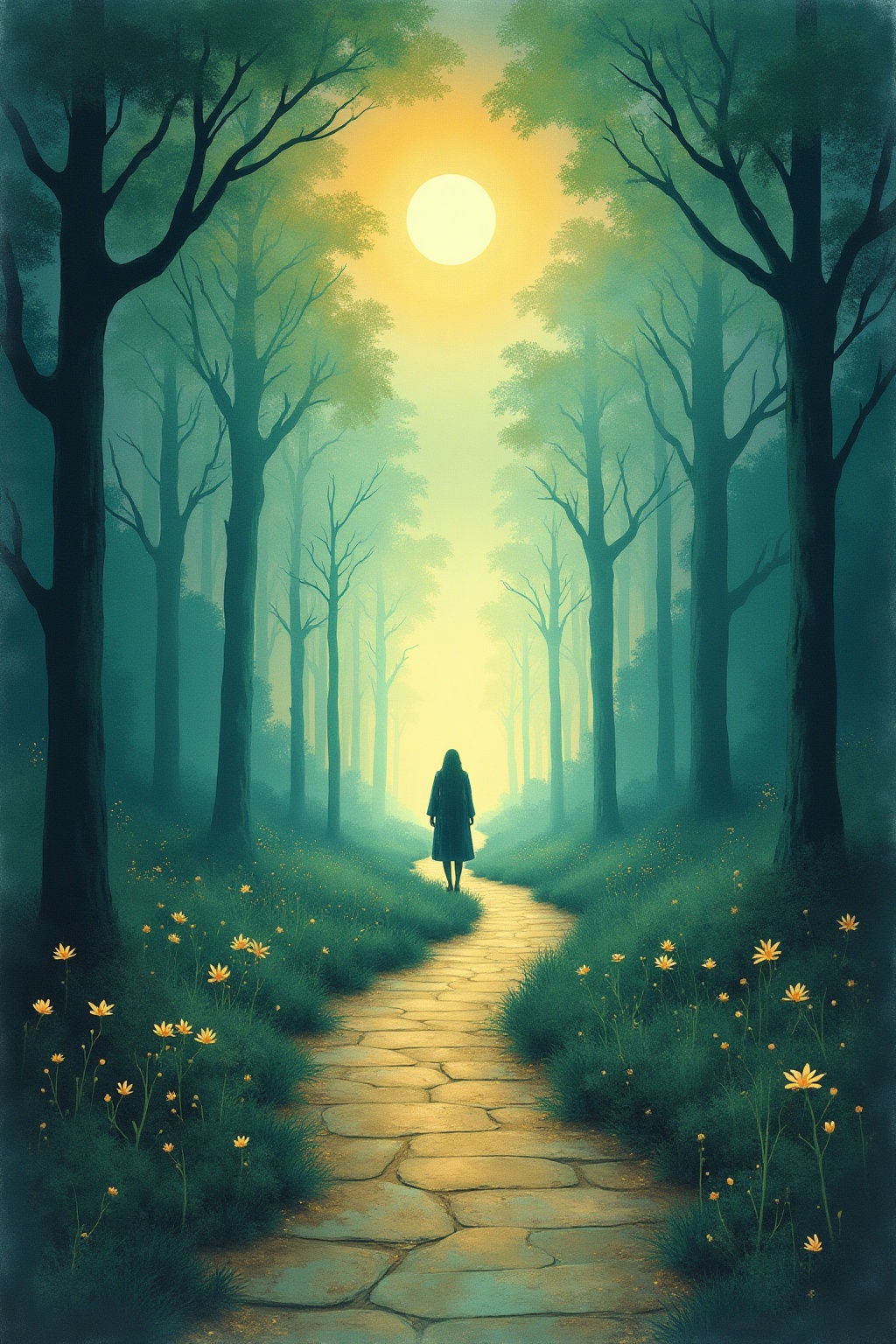
A portrait card is made for every reading, sized for Pinterest.